
Under-Sink Drywall Repair: When to Patch or Add an Access Panel

An irregular drywall hole under a bathroom sink can usually be repaired with a supported drywall patch, but you should never permanently cover plumbing shut-off valves or connections that need servicing. If the opening provides necessary access to plumbing, a removable access panel may be a better solution than sealing the wall completely.
The right approach depends on what's behind the opening, whether the surrounding drywall is sound, and which plumbing components must remain accessible.
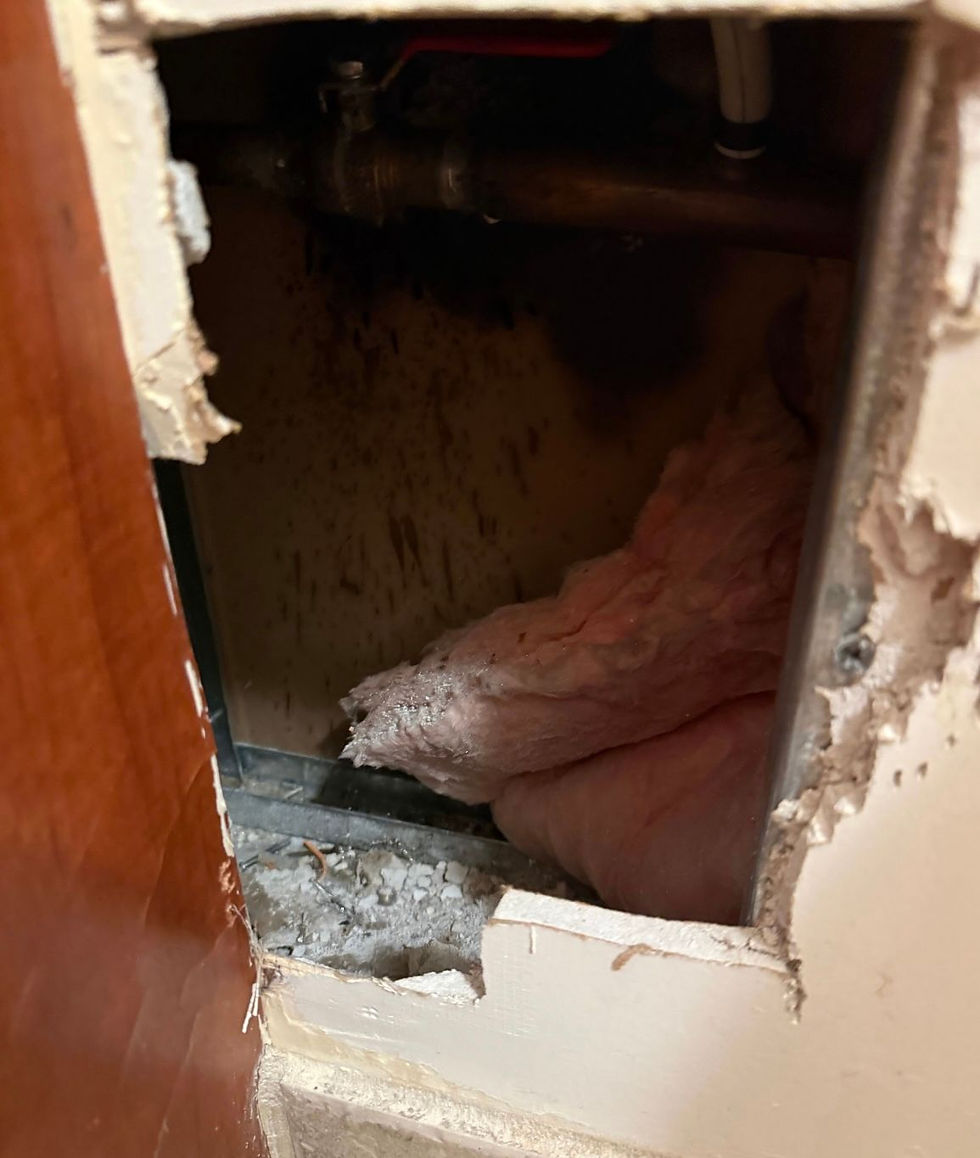
A recent HANDLD bathroom repair illustrates this situation. The homeowner had damaged drywall inside an under-sink cabinet, along with a separate request to install a wall shelf and hang artwork. The before photos showed large, irregular wall openings around plumbing. HANDLD completed the wall patching, installed the shelf and mounted five frames.
What to Check Before Repairing Drywall Under a Sink
Before covering an opening inside a bathroom vanity, inspect the exposed area and determine why access might be needed.
Three things matter most:
Plumbing access: Identify shut-off valves, pipe connections and other components that may require future maintenance.
Moisture: Check for active leaks, damp insulation, water stains or softened drywall. Any moisture problem needs to be addressed before the wall is closed.
Wall condition: Look for loose drywall, damaged edges and suitable framing or other locations where a patch can be supported.
An opening under a sink isn't necessarily evidence of a plumbing leak. Drywall may have been removed during previous plumbing work, renovations or maintenance.
However, covering an opening without checking the plumbing can make future repairs unnecessarily difficult.
A Real HANDLD Job: Repairing Bathroom Drywall Around Plumbing
In a completed HANDLD residential project, the homeowner requested bathroom drywall repairs, installation of a wall shelf and mounting of seven paintings.
The before photos documented two rough openings inside an under-sink cabinet.
One opening exposed insulation and a copper pipe with a valve. Another showed an opening beside a large white pipe and metal framing.
The irregular edges and exposed wall cavity made this more involved than filling ordinary nail holes.
HANDLD's completed work record confirms that the technician:
Patched holes in the wall.
Installed a wall shelf.
Mounted five picture frames.
The job was marked fully completed and verified.
The project demonstrates a common household maintenance situation: bathroom wall repairs can be combined with other small installation tasks during a handyman visit.
It also highlights an important planning consideration. When drywall openings are located near plumbing, the repair should account for future access rather than focusing only on concealing the hole.
How Do You Patch an Irregular Drywall Hole Under a Bathroom Vanity?
For an opening that does not need to remain accessible, a conventional drywall patch can provide a finished wall surface.
The general repair process involves preparing the damaged area, providing support for the replacement drywall and finishing the seams.
1. Prepare the opening
Loose drywall and damaged edges should be removed so the repair can connect to sound material.
Irregular openings are often easier to repair when their edges are trimmed into a manageable shape. However, cutting must be planned carefully around exposed pipes, wiring and framing.
Avoid enlarging an opening without first identifying nearby services.
2. Provide support for the patch
A larger drywall opening generally needs backing or a connection to suitable framing.
Depending on the wall, this might involve attaching backing strips behind the existing drywall or fastening a replacement piece to accessible framing.
Backing helps prevent the patch from moving and provides a stable surface for finishing the joints.
A surface layer of joint compound alone is not an appropriate substitute for a supported patch across a large opening.
3. Fit the replacement drywall
The replacement piece should fit the prepared opening without pressing against plumbing components.
The patch should be secured to its backing or framing using appropriate fasteners.
Where pipes pass through the wall, the surrounding openings should be planned to accommodate the plumbing without restricting required access.
4. Tape and finish the seams
Drywall tape reinforces the joints between the patch and the existing wall.
Joint compound is then applied in successive thin coats, with appropriate drying and sanding between applications.
Thin, properly dried coats help produce a smoother finish and reduce the likelihood of noticeable ridges.
The repaired area can then be primed and painted if those finishing steps are included in the repair.
These are general drywall repair methods, not a record of the specific materials or techniques used during the HANDLD project.
When Should You Use a Removable Access Panel Instead?
A removable access panel is preferable when the wall opening provides access to plumbing components that may need inspection, adjustment, repair or replacement.
For example, permanently covering a shut-off valve with drywall could prevent someone from quickly turning off the water during a plumbing problem.
A removable panel provides a finished covering while allowing the plumbing behind it to be reached again.
An access panel is particularly worth considering when:
A shut-off valve would otherwise be concealed.
A serviceable plumbing connection is located behind the wall.
The opening is already positioned where maintenance access is useful.
Future servicing would otherwise require cutting through finished drywall.
The panel must be large enough and positioned appropriately for the components that need servicing. A small opening that technically exposes a valve may still be inadequate if there isn't enough room to operate it or perform necessary repairs.
Some plumbing may require specific access arrangements under applicable requirements. Those requirements should be checked before permanently closing the wall.
Can you combine a drywall patch with an access panel?
Yes. When only part of an opening needs to remain accessible, the surrounding damaged drywall can be repaired while a removable panel provides access to the necessary plumbing components.
This can be more practical than leaving a large, irregular opening exposed inside the cabinet.
The access panel should be planned before the drywall is patched so its position and surrounding support can be incorporated into the repair.
What If There Is Moisture or Water Damage Behind the Vanity?
If the exposed drywall, insulation or surrounding cabinet materials are wet, investigate the source before proceeding with cosmetic repairs.
Patching over active moisture can conceal a continuing problem and contribute to deterioration behind the finished surface.
Check accessible supply connections, shut-off valves and drain components for signs of leakage.
If water damage is present, the affected materials may need assessment, drying or replacement before the wall can be repaired.
Drywall compound and paint do not solve an underlying plumbing leak.
For a bathroom repair, suitable primer and finish paint also matter. Fresh joint compound absorbs paint differently from an existing painted surface, so primer helps produce a more consistent finish.
Where the surrounding wall is painted, matching both colour and sheen helps reduce visible differences between the patch and the original surface.
Should You Repair Under-Sink Drywall Yourself?
A small opening with sound surrounding drywall and no nearby plumbing complications may be manageable for a homeowner comfortable with drywall repairs.
A larger, irregular opening can be more challenging, particularly when pipes, valves, insulation or framing are exposed.
Professional help is worth considering when the repair requires new backing, work close to plumbing, assessment of moisture damage or installation of an access panel.
The goal is not simply to make the opening disappear. It's to restore the wall while preserving the access needed to maintain the sink and plumbing.
Frequently Asked Questions
Can I cover exposed pipes with drywall under my bathroom sink?
Some plumbing can be enclosed behind drywall, but components requiring maintenance access must remain accessible. Before closing an opening, identify any shut-off valves, serviceable connections or other components that need to be reached. A removable access panel may be appropriate.
Does an access panel need to be the same size as the original drywall hole?
Not necessarily. The panel should provide sufficient access to the plumbing that requires servicing. The surrounding damaged drywall can be repaired separately. Panel dimensions should be based on the actual access requirements rather than the original hole alone.
Can a handyman repair bathroom drywall and install shelves or artwork during the same visit?
Yes, depending on the scope of work. In the documented HANDLD project, the technician patched wall holes, installed one shelf and mounted five picture frames. The appropriate scope for another appointment depends on the repairs and installations required.
Need Help With Bathroom Drywall Repair?
If you have an irregular drywall opening inside a bathroom vanity, HANDLD can help assess the wall repair and whether plumbing access needs to be preserved.
Contact HANDLD to discuss bathroom drywall repair or other small home maintenance tasks in Toronto and the GTA.







Comments