
How to Mount a Shelf on a Concrete Wall Without Damage

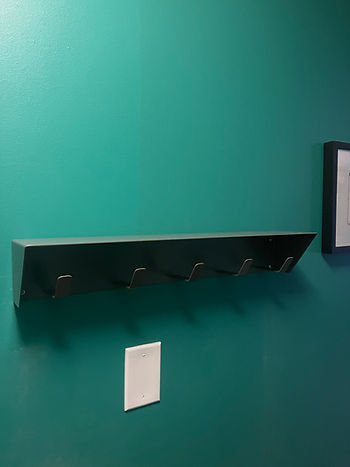
Trying to mount a shelf on a concrete wall can turn into a damaged surface and a loose shelf surprisingly quickly. Concrete needs the right fastener, correctly sized hole and careful drilling technique. Using a screw or drilling method intended for drywall or wood can leave the fastener unable to grip and may chip the wall around the hole.
A recent HANDLD project involved an entryway shelf being installed on a concrete wall after an earlier mounting attempt had caused problems. Pilot holes had been drilled with a masonry bit, but the wall surface became damaged when the screws were driven and the shelf would not hold. HANDLD completed the installation, and the finished shelf appears level and securely mounted, with no visible chipping around the fastener locations.
The exact anchors and installation method used on this project were not recorded, so the guidance below describes general professional practices rather than claiming specific steps were performed on this job.
Why mounting a shelf on concrete requires the right fastener
Concrete does not accept ordinary screws the way wood does. A fastener needs a concrete-rated anchoring system, and its performance depends on factors including hole diameter, drilling depth, embedment and the condition of the concrete.
When a screw will not bite or the surface begins crumbling as it is tightened, common causes include an unsuitable fastener, an incorrectly sized or shallow hole, or drilling dust remaining inside the hole. These were possible causes in the completed HANDLD project, but they were not independently confirmed as the diagnosis.
For homeowners, the important lesson is not to keep forcing a fastener when resistance changes unexpectedly. Continuing can enlarge or damage the hole and make the eventual repair more difficult.
Choosing anchors for a concrete wall shelf
The appropriate anchor depends on the shelf, its mounting hardware, the expected load and the manufacturer's requirements. For many light-duty shelves and coat racks, concrete screws such as 3/16-inch or 1/4-inch Tapcon-style fasteners can be an option when correctly installed in suitable concrete. Other applications may call for hammer-set or sleeve anchors.
Avoid substituting ordinary wood or drywall screws for concrete-rated fastening hardware. Always use the drill-bit diameter, minimum embedment and installation procedure specified by the anchor manufacturer. For heavier installations, anchor selection and load ratings become especially important.
How to drill into concrete without unnecessary chipping
Accurate preparation can make the difference between a clean installation and a damaged mounting point. Start by locating and levelling the shelf before marking the mounting holes. Check the proposed drilling locations for possible electrical or other hidden services. A suitable scanner can help, but homeowners should avoid drilling when there is uncertainty about what is behind or within the wall.
A hammer drill with a carbide masonry bit is generally the appropriate tool for solid concrete. The bit needs to match the diameter specified for the chosen anchor. As general guidance, the hole is commonly drilled deeper than the required fastener embedment—often by approximately 1/2 inch—but the anchor manufacturer's instructions should control the final dimensions.
Hole cleaning matters as well. Concrete dust packed at the bottom or along the sides of a hole can interfere with proper installation. Vacuuming and clearing the hole before inserting the anchor helps give the fastener the conditions it was designed for.
Where practical and consistent with the fastening manufacturer's instructions, keep mounting holes away from concrete edges and corners. Using the shelf manufacturer's intended mounting points also helps distribute the load appropriately.
What to do when a concrete anchor will not go in properly
If a concrete screw suddenly becomes unusually difficult to drive, forcing it further is not necessarily the answer. With Tapcon-style fasteners, general practice can include backing the screw out, clearing remaining drilling dust and trying again according to the manufacturer's installation instructions.
A hole that has already broken out or become substantially enlarged may no longer provide a reliable mounting point. Depending on the situation, damaged concrete can sometimes be repaired with an appropriate epoxy or cement-based repair product, allowed to cure, and a new mounting point established elsewhere. Product requirements and safe spacing should determine the repair approach rather than simply drilling immediately beside the failed hole.
A practical example from a HANDLD concrete-wall installation
On this HANDLD job, the homeowner needed an entryway shelf mounted after an earlier attempt had left the screws unable to hold properly and had damaged the wall surface. HANDLD completed the concrete-wall installation.
The finished condition provides the part of the project we can directly verify: the matte dark metal shelf and coat rack appears level and securely mounted, and there is no visible surface chipping or spalling around its fastener locations. Because the specific anchors were not documented, it would be inaccurate to identify a particular anchor system as the one used on this installation.
That distinction is useful for any concrete mounting project: a clean finished appearance starts with choosing fastening hardware that suits the wall, fixture and expected load rather than treating every wall as if it were drywall.
Toronto condo considerations for concrete wall drilling
Solid concrete walls are encountered in many Toronto and GTA condo mounting projects, although wall construction varies between buildings and locations within an individual unit. Confirm what the wall is made from before selecting fasteners.
Condo residents should also check their building's applicable renovation or noise rules before using a hammer drill. Concrete drilling creates considerable noise and dust, so floor protection and effective dust collection are sensible precautions. Silica-containing dust generated by drilling concrete should be controlled rather than allowed to spread through the home.
There is another reason to plan each hole carefully: hidden electrical or other building services may be present. Be particularly cautious around electrical fixtures and other locations where concealed services may run. If the wall construction or drilling location is uncertain, professional help is the safer option.
Frequently Asked Questions
What anchors should I use to hang a light shelf or coat rack on concrete?
Concrete screws, including 3/16-inch or 1/4-inch Tapcon-style fasteners, may be appropriate for many light shelf and coat-rack applications in suitable concrete. Hammer-set anchors can also be appropriate for some installations. Follow the shelf and anchor manufacturers' requirements for fastener type, drill size, embedment and load capacity rather than choosing based on diameter alone.
Do I need a hammer drill for concrete?
A hammer drill fitted with a suitable carbide masonry bit is strongly recommended for drilling solid concrete. A conventional drill can be slower and may make it difficult to produce a clean, correctly sized hole.
Why did my concrete hole crumble when I drove the screw?
Possible causes include using a fastener that is not designed for concrete, drilling a hole of the wrong diameter or depth, or leaving drilling dust inside the hole. Local concrete conditions can also affect the result. Stop if the hole is visibly breaking apart rather than continuing to force the fastener.
How much weight can my concrete-mounted shelf hold?
There is no reliable universal weight limit. Capacity depends on the anchor type and diameter, embedment, number and spacing of anchors, concrete condition, shelf or bracket design and installation quality. Use the relevant manufacturers' load information and installation requirements for the specific products involved.
Are there condo-specific considerations for concrete drilling in Toronto?
Yes. Check applicable building rules and permitted drilling hours before starting. Plan for noise and concrete-dust control, and take care to avoid hidden electrical or other services. Building construction varies, so confirm the wall material rather than assuming every condo wall is solid concrete.
Need help mounting a shelf on a concrete wall?
A small mounting job becomes much harder once holes start crumbling or fasteners stop holding. HANDLD provides professional handyman, installation and wall-mounting services for homeowners in Toronto and the GTA. If you need a shelf, coat rack or similar fixture securely installed on a concrete wall, contact HANDLD to arrange service.
Need a shelf, coat rack or fixture mounted on concrete? Book HANDLD for professional wall-mounting service in Toronto and the GTA.


Comments